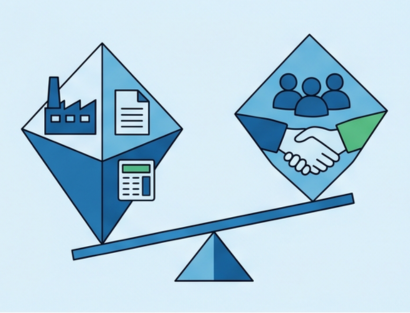
Customer relationship management and enterprise resource planning are two important software tools that help companies improve their business operations. While they share some advantages and functionalities, they are not interchangeable and serve different purposes.
This article explores the benefits of ERP CRM systems. It also explains the key differences between the two systems and helps you determine whether one or both solutions are suitable for your organization.
Main Takeaways From This Article:
- ERP systems are designed to streamline and automate internal business processes, improving overall operational efficiency.
- CRM systems focus on managing a company's interactions with current and potential customers, enhancing customer service, and driving sales growth.
- While ERP and CRM both utilize data, ERP centers on internal data for resource planning, and CRM leverages customer data for relationship management.
- Integration of ERP and CRM software can offer a holistic view of business operations, facilitating better decision-making and comprehensive data management.
What Is ERP (Enterprise Resource Planning)?
ERP, or Enterprise Resource Planning, is a type of software that helps different parts of a business work together smoothly. It centralizes data and automates functions like finance, human resources, manufacturing, and supply chain management.
By doing so, ERP systems enhance efficiency, provide real-time insights, and streamline operations across different departments.
What Is CRM (Customer Relationship Management)?
CRM, or Customer Relationship Management, is a tool that helps companies keep track of their conversations and connections with customers, both old and new. It makes it easier for businesses to work better, build strong relationships with customers, sell more products, provide great service, and make more money.
Simply put, CRM focuses on managing customer information, tracking interactions, and facilitating enhanced communication.
ERP Benefits
ERP systems have many benefits that can help make your business run better and faster. Here are some of the main advantages:
- Effective resource management
- Better scalability
- Reduced errors
- Improved customer satisfaction
- Streamlined business operations across various departments
- Improved visibility and access to information
- Standardization and adherence to rules
- Enhanced collaboration
- Automation of business processes
- Connection of financial and operational systems to a central database
CRM Benefits
A CRM system is a powerful tool for managing customer interactions, improving sales, and boosting customer satisfaction. Here are some of the key benefits of using a CRM system:
- Streamlines sales and customer service processes
- Enhances sales performance
- Centralizes customer information
- Facilitates better data organization
- Collects and stores information from marketing and sales
- Improves customer experience and satisfaction
- Generates sales projections
- Tracks communications with customers
- Increases profits through better customer interactions
- Provides higher conversion rates
Key Differences Between ERP and CRM
ERP systems are designed to help companies run their internal processes smoothly, while CRM systems focus on creating and keeping good relationships with customers. Let's examine their key differences in detail below.
Primary Focus: Internal vs. External Functions
- ERP: This software primarily focuses on managing internal business processes, such as finance, accounting, inventory, and human resources. It's designed to optimize operations, improve efficiency, and reduce costs within the organization.
- CRM: In contrast, CRM focuses on managing external interactions with customers and prospects. It's designed to build and maintain strong relationships, improve sales, and enhance customer satisfaction.
Business Process Management vs. Relationship Management
- ERP: This emphasizes automating and optimizing workflows, ensuring smooth execution of internal processes. It's about streamlining operations and improving efficiency within the organization.
- CRM: On the other hand, CRM emphasizes building and nurturing relationships with customers and prospects. It's about understanding customer needs, providing excellent service, and driving sales.
Data Focus
- ERP: ERP focuses on financial data, inventory levels, production processes, and human resources information. It's designed to provide insights into internal operations and resource allocation.
- CRM: This system primarily focuses on customer data, contact information, sales pipeline, communication history, and purchase history. It's designed to provide insights into customer behavior, preferences, and interactions.
Users
- ERP: ERP is typically used by finance, accounting, operations, and supply chain departments. It is essential for managing the business's day-to-day operations.
- CRM: CRM, on the other hand, is used by sales, marketing, and customer service teams. It is essential for interacting with customers, generating leads, and providing excellent customer support.
How ERP and CRM Systems Work Together
ERP and CRM systems perform different jobs, but they can also work well together to create a powerful solution for businesses. When integrated, these systems can provide valuable insights, streamline operations, and improve overall business performance.
Complementary Functions
ERP and CRM systems are often viewed as complementary, with each system enhancing the other's functionalities for a comprehensive business solution.
- Shared Data: Integrated ERP and CRM systems allow for seamless data sharing between the two platforms. This enables a more holistic view of the business, as information about customers, sales, inventory, and operations can be accessed and analyzed from a single source.
- Improved Workflow: By integrating ERP and CRM, businesses can streamline workflows and eliminate redundant tasks. For example, customer information can be automatically updated in the ERP system when a sale is closed in the CRM, reducing manual data entry and errors.
- Enhanced Customer Experience: CRM data can be used to inform ERP processes, such as inventory management and production planning, ensuring that products are available when customers need them. This offers customers a better and more personalized experience.
Data Sharing Across Systems
ERP and CRM systems share data, which allows for real-time information updates. This ensures all departments have access to the most current data, enhancing collaboration and efficiency.
- Real-time Updates: Information is shared between ERP and CRM systems in real-time, ensuring that both systems have the most up-to-date data.
- Improved Visibility: Integrated systems provide a more comprehensive view of the business, allowing for better visibility into key metrics and performance indicators.
- Data-Driven Decision Making: By combining data from ERP and CRM systems, businesses can make more informed decisions based on real-time insights.
Improved Decision-Making
With real-time data sharing, ERP and CRM systems empower businesses to make faster, more accurate decisions that drive profitability and growth.
- Enhanced Analytics: Integrated systems can provide more robust analytics capabilities, allowing businesses to gain deeper insights into their operations and customer behavior.
- Optimized Resource Allocation: By combining data from ERP and CRM systems, businesses can optimize resource allocation and improve efficiency.
- Proactive Problem-Solving: Integrated systems can help identify potential issues early on, allowing businesses to take proactive steps to address them.
ERP Systems With Integrated CRM: The Best of Both Worlds
A growing trend in the business world is the adoption of ERP systems with integrated CRM capabilities. These all-in-one solutions offer the best of both worlds, combining the efficiency and control of ERP with the customer-centric focus of CRM.
All-in-One Solutions
ERP systems with integrated CRM provide a single platform for managing both internal operations and customer relationships. The integration of ERP and CRM functions ensures that data flows seamlessly between the two systems, providing a more comprehensive view of the business. This eliminates the need for multiple systems and reduces complexity.
Streamlined Operations and Customer Interactions
Integration of these two systems can streamline business processes and reduce manual tasks, leading to improved efficiency and productivity. It helps sales teams identify and qualify leads, track sales opportunities, and improve conversion rates. By having access to customer information and transaction history within a single system, businesses can provide more personalized customer service.
Centralized Data Management
A centralized data repository ensures that all departments have access to the same information, eliminating data silos and improving decision-making. By combining data from ERP and CRM systems, businesses can gain deeper insights into their operations and customer behavior due to improved data quality.
Choosing the Right System: ERP, CRM, or Both?
Selecting the right software solution for your business is a critical decision. While ERP and CRM systems offer distinct benefits, determining whether you need one, the other, or both depends on your specific business needs and goals.
When to Choose ERP
If your business faces one or all of the following challenges, an ERP system might be the right choice:
- Complex Operations: If your company manages multiple business functions, such as finance, HR, procurement, and supply chain management, an ERP system can help streamline these operations into a single, cohesive framework.
- Growing Business: As your enterprise scales, keeping track of disparate systems becomes challenging. ERP offers the scalability needed to support growing business needs.
- Regulatory Compliance: For industries that are heavily regulated, ERP systems offer built-in compliance features to ensure you meet legal and industry requirements.
When to Choose CRM
If your goal is to understand your customers better, enhance your sales and marketing strategies, and provide exceptional customer support, then integrating a CRM system is the way to go:
- Customer Relationship Management: If your business heavily relies on customer interactions and building relationships, a CRM system is essential for managing leads, sales opportunities, and customer data.
- Marketing and Sales Force Automation: If you need a system to help your marketing and sales teams manage marketing campaigns, track leads and sales pipelines, monitor and analyze campaign performance, and improve sales productivity, a CRM is a valuable tool.
- Improving Customer Service: A CRM can be beneficial if you want to improve customer service by providing better support, tracking customer inquiries, and managing customer satisfaction.
When to Choose Both
Deciding between ERP and CRM can be challenging, especially when both offer unique benefits that can drive your business forward. But sometimes, the best choice is not one or the other; it's both.
Here are some scenarios that highlight when choosing both systems makes sense:
- Higher Operational Efficiency: When your operations span multiple departments, and you need a system to manage everything from supply chain logistics to customer feedback.
- Navigating Growth Phase: If your company is rapidly growing and you anticipate growing needs in both transaction management and customer care.
- Serving Custom Needs: When your business has unique requirements that off-the-shelf solutions can't fully address, integrating both ERP and CRM systems can provide a more customized approach.
- Making Data-Driven Decisions: If your business strategy relies heavily on data insights, having both systems will allow you to collect and analyze a comprehensive set of data points, leading to better-informed decisions.
ERP vs. CRM: Finding the Right Fit for Your Business With Kimco
ERP and CRM are two powerful tools for modern-day businesses, but they serve distinct purposes. While ERP systems shine at managing internal operations, optimizing workflows, and ensuring efficient resource allocation, CRM systems excel at nurturing customer relationships, boosting sales, and providing exceptional customer service.
However, combining the two creates a powerful ecosystem for businesses. Streamlined operations meet exceptional customer interactions, leading to improved efficiency, boosted sales, and, ultimately, a thriving business.
Kimco's innovative ERP software goes beyond traditional solutions by integrating robust CRM capabilities. This allows your business to gain real-time insights into both internal and customer-facing processes. From optimizing production planning to providing exceptional customer service, our comprehensive platform empowers you to manage your entire business with greater efficiency and effectiveness.
Ready to experience the benefits of a unified solution?
Book a demo with Kimco and discover how our ERP software can help you achieve streamlined operations, improved customer interactions, and, ultimately, long-term success.