
Explore 15 strategies for boosting warehouse efficiency, enhancing productivity, and ensuring your business remains competitive in the dynamic landscape.
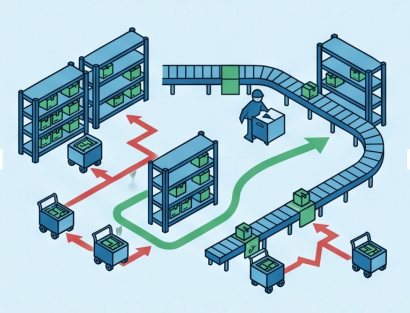
The modern warehouse operates in a high-stakes environment. The competition is fierce, and customer expectations have never been higher. These operations have to be precise with rapid turnaround times. If not, they lead to increased costs, late shipments, and disappointed customers. This complex ecosystem, however, requires an efficient operation.
This blog post outlines 15 strategies for boosting warehouse efficiency, enhancing productivity, and ensuring your business remains competitive in the dynamic landscape this year promises to bring.
Warehouse efficiency refers to the ability to handle the storage and movement of goods in a warehouse in an optimal way. It includes aspects like space utilization, inventory management, order fulfillment speed, and labor productivity. A highly efficient warehouse helps get the right products to the right customers at the right time while reducing costs and maximizing resource utilization.
Here are the proven strategies to improve your warehouse efficiency in 2026 and beyond:
A well-designed warehouse layout minimizes travel distances, reduces the risk of damage, and improves order picking speed, which translates to faster order fulfillment, lower labor costs, and increased productivity.
Analyze your current space utilization, identify bottlenecks, and pinpoint areas for improvement. Use floor plans and 3D modeling tools to visualize potential improvements. Categorize inventory based on factors like size, weight, demand frequency, and picking velocity. Store frequently picked items in easily accessible locations, such as those closest to picking stations, and utilize fast movers, slow movers, and dead zones to optimize storage space and reduce travel distances.
Accurate and timely inventory data is crucial for efficient warehouse operations. Without it, it's impossible to fulfill orders accurately, manage stock levels effectively, and minimize the risk of stockouts or overstocking.
Implementing robust warehouse management software can help you track inventory in real-time, automate order fulfillment processes, and generate accurate reports. Embrace ABC analysis to categorize inventory based on value and demand, allowing you to prioritize management efforts on high-value items.
Consider a "Just-In-Time" inventory approach to minimize holding costs by ordering inventory only when needed, reducing the risk of obsolescence and minimizing storage space requirements.
Automation and data-driven insights can significantly improve productivity, accuracy, and overall performance. By embracing technology, warehouses can gain a competitive edge, improve customer satisfaction, and reduce operational costs.
Implement a robust WMS to automate order picking, packing, and shipping processes and gain real-time visibility into inventory levels and order status. Integrate warehouse robotics for tasks such as picking, packing, and sorting to improve speed and accuracy and reduce the risk of human error. Explore voice-picking technology to enhance order fulfillment speed and accuracy while minimizing errors and improving employee safety.
Your employees are your most valuable asset. A motivated and engaged workforce is essential for efficient and productive warehouse operations. Investing in employee well-being and providing a supportive work environment can significantly impact productivity, accuracy, and overall morale.
Invest in comprehensive training programs to equip employees with the necessary skills and knowledge to perform their jobs effectively and safely. Create an ergonomic work environment to minimize physical strain and improve employee comfort, reducing the risk of injuries and improving overall well-being. Offer competitive wages and benefits to attract and retain a motivated and engaged workforce.
Wasting resources such as labor, equipment, and energy can significantly impact the bottom line. By optimizing resource utilization, warehouses can improve efficiency, reduce operating costs, and enhance overall sustainability.
Schedule dock appointments to minimize truck waiting times and improve the flow of goods. Consolidate shipments whenever possible to reduce transportation costs and improve fuel efficiency. Implement preventive maintenance programs for warehouse equipment to minimize downtime and ensure optimal performance, extending the lifespan of equipment while cutting down on costly repairs.
Tracking KPIs is crucial for identifying areas for improvement and measuring the effectiveness of implemented strategies. By monitoring key metrics, warehouse managers can gain valuable insights into operational performance, identify bottlenecks, and make data-driven decisions to improve efficiency and productivity.
Monitor key metrics such as order fulfillment accuracy, picking speed, inventory turnover, warehouse operating costs, and labor productivity. Utilize data analysis tools to identify trends, identify areas for improvement, and track the progress of implemented initiatives. Regularly review and analyze KPI data to identify areas for improvement and make necessary adjustments to operational processes.
Businesses are constantly evolving, and warehouses need to be able to adapt to changing demands. Preparing for future growth is essential to ensure that the warehouse can handle increased order volume, inventory levels, and operational complexity.
Design the warehouse with scalability in mind, considering factors such as future expansion needs, the potential for increased inventory volume, and the flexibility to accommodate new technologies. Invest in flexible and adaptable infrastructure and technology that can easily scale with your business needs. Regularly assess future growth projections and adjust warehouse operations and capacity accordingly to accommodate anticipated demand.
Automation is transforming the warehouse industry, improving efficiency, accuracy, and productivity. By investing in automation technologies, warehouses can reduce labor costs, minimize human error, and improve overall operational efficiency.
Explore automation solutions beyond robotics, such as automated guided vehicles (AGVs), conveyor systems, and automated sorting machines. Evaluate the return on investment (ROI) of automation technologies to ensure they align with your business goals and budget constraints. Implement automation technologies in phases, starting with high-impact areas and gradually expanding as needed.
Maintaining high product quality is crucial for customer satisfaction and brand reputation. Implementing robust quality control procedures helps to minimize errors, ensure product accuracy, and prevent damage to goods.
Implement rigorous quality control checks at every stage of the warehouse process, including receiving, picking, packing, and shipping. Utilize technology such as barcode scanners and RFID to track product movement and identify any discrepancies. Train employees on quality control procedures and empower them to identify and address any quality issues.
Accurate demand forecasting is essential for effective inventory management and efficient warehouse operations. By accurately predicting future demand, warehouses can optimize inventory levels, adjust staffing levels, and ensure that they have the necessary resources to meet customer needs.
Use historical data and predictive analytics to accurately forecast future demand. Consider factors such as seasonality, promotions, and economic trends when developing demand forecasts. Regularly review and refine forecasting models to improve accuracy and adjust forecasts as needed based on actual demand.
RTLS technology provides real-time visibility into the location of assets within the warehouse, including inventory, equipment, and even personnel. This real-time data can improve operational efficiency, reduce search times, and enhance inventory accuracy.
Implement RTLS technology using RFID tags, Bluetooth beacons, or GPS to track inventory movement throughout the warehouse. Use the data collected by the RTLS system to optimize picking routes, improve inventory accuracy, and prevent theft or misplaced items. Integrate RTLS data with your WMS to gain a comprehensive view of inventory location and movement.
Cross-docking is a strategy that minimizes inventory storage time by directly transferring goods from incoming vehicles to outgoing vehicles, bypassing the storage process. This can reduce handling costs, improve order fulfillment speed, and free up valuable warehouse space.
Evaluate the suitability of cross-docking for your specific business and product mix. Implement a well-defined cross-docking process, including clear procedures for receiving, sorting, and transferring goods. Ensure that your warehouse layout and equipment are optimized for efficient cross-docking operations.
ABC analysis is a vital inventory management technique that categorizes inventory items into three groups: A (high-value/high-demand), B (medium-value/medium-demand), and C (low-value/low-demand). This classification allows businesses to prioritize inventory management efforts and allocate resources effectively.
Conduct a thorough ABC analysis to classify your inventory based on factors such as value, demand, and sales velocity. Implement stricter controls and more frequent inventory checks for A items to minimize the risk of stockouts and ensure timely replenishment. Allocate resources and implement tighter controls for A items to ensure optimal inventory management.
Inventory theft and loss can have a major impact on a company's bottom line. Implementing robust security measures is essential to protect inventory and prevent losses.
Implement physical security measures such as surveillance cameras, access control systems, and secure storage areas. Conduct regular inventory audits to identify any discrepancies and investigate potential losses. Train employees on security protocols and ensure they are aware of their responsibilities in maintaining a secure environment.
Lean principles focus on identifying and eliminating waste in all areas of operations. By implementing lean practices in the warehouse, businesses can streamline processes, reduce costs, and improve overall efficiency.
Identify and eliminate waste in all areas of warehouse operations, such as excess motion, waiting time, overproduction, and defects. Strive for improvement by regularly reviewing and refining warehouse processes. Empower employees to identify and suggest improvements to warehouse operations, and implement their feedback where appropriate.
Warehouse efficiency can be riddled with challenges. Let's explore some of the most common ones and how to overcome them:
Space constraints are a common challenge for many warehouses, especially in urban areas or as businesses experience growth. Limited warehouse space can restrict inventory storage, hinder order-picking processes, and limit the potential for implementing new technologies.
Solutions:
Finding and retaining skilled warehouse workers can be challenging, especially in a competitive labor market. Labor shortages can lead to delays in order fulfillment, decreased productivity, and increased operational costs.
Solutions:
This is critical for customer satisfaction and business reputation, as inaccurate orders can lead to customer returns, dissatisfaction, and increased costs.
Implementing the warehouse efficiency strategies outlined in this post can keep you competitive this year. However, continuous improvement is key. Regularly evaluate your warehouse efficiency measures and explore new ways to refine your operations.
Partnering with a leading ERP provider like Kimco can provide you with access to innovative technologies and strategies that can significantly optimize your operations. Kimco offers a comprehensive suite of solutions, including warehouse management systems, automation technologies, and consulting services, all designed to streamline your processes and boost efficiency.
Ready to take the next step? Book a demo and learn how our software can help transform your warehouse operations today.

Start your journey with KIMCO today and explore how our manufacturing management software can simplify your operations, step up productivity, and help you meet all your business goals.
