
Discover the power of inventory control. Learn about key methods and systems to optimize your stock levels, reduce waste, and boost operational efficiency.
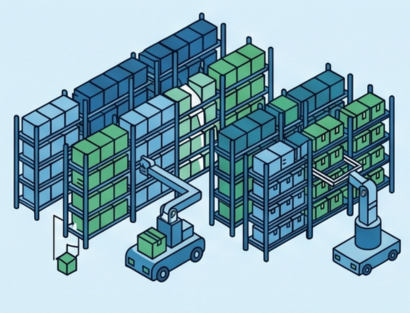
Inventory control is more than just a back-end function that involves counting items on shelves; it is a strategic process for any business that manufactures and/or sells products.
Whether you’re running a small retail shop or overseeing the supply chain of a large manufacturing company, having a firm grip on your inventory can mean the difference between success and failure, as it drives efficiency, reduces waste, and boosts customer satisfaction.
In this blog post, we'll explore the commonly used inventory control methods and systems that can transform your operations. With the right inventory control systems in place, your business can optimize stock levels and improve manufacturing operations.
Inventory control refers to the process of managing a company’s stock of goods, from raw materials to finished products. It involves accurate record-keeping, strategic ordering, and regular auditing to ensure that the right amount of product is available at all times. Effective inventory control helps avoid overstocking (tying up too much capital and risking obsolescence or spoilage) and stockouts (losing sales and upsetting customers when items aren’t available).
Note: Inventory control isn’t the same as inventory management. Inventory management focuses on the entire product lifecycle, from procurement to sales fulfillment. Inventory control, a subset of inventory management, is about regulating stock levels.
Different businesses have different needs, supply chains, and customer demands. As no single inventory control method can be ideal for every company, it's best to consider a range of commonly used methods, including:
Just-in-Time (JIT) is an inventory strategy that aims to have inventory delivered and available exactly when needed in the production or sales process—no earlier and no later. The goal is to minimize waste, reduce storage costs, and free up capital by keeping inventory levels as lean as possible.
This approach was famously developed and refined within the Toyota Production System, and it’s used worldwide across various industries.
With JIT, you only order and receive goods as the demand arises. This requires incredibly accurate demand forecasting and a highly reliable supply chain. Any delay or hiccup from your suppliers can cause immediate shortages and potentially halt production or lead to missed sales.
Economic Order Quantity (EOQ) is a formula-based method that calculates the optimal order size to minimize both holding costs and ordering costs. It provides a theoretical number you should order each time to achieve the lowest total cost per order, given consistent consumer demand and other static factors.
The EOQ formula takes into account annual demand, cost per order, and carrying costs per unit. It provides a precise number (the “economic order quantity”), helping you determine when and how much to re-stock.
ABC Analysis classifies inventory items based on their value and usage frequency. Typically, products are grouped as:
This method helps prioritize which items need the most stringent control and which can be managed more loosely. You focus the majority of your attention on A-items, ensuring they are always optimized, while B and C items get progressively simpler, more routine oversight.
In a FIFO system, the oldest inventory items (first in) are sold or used first (first out). It is most relevant for perishable items or products that carry an expiration date, ensuring that older goods are not left sitting on shelves.
In a warehouse setting, shelves are organized so that the oldest items are easily accessible and removed first. This approach is commonly used in grocery stores, pharmacies, and any business where product freshness or shelf life is critical.
Last-In, First-Out (LIFO) assumes that the most recently received stock is the first to be sold. This approach is often used for valuation purposes in certain accounting practices, especially where tax advantages might be realized in times of inflation.
Businesses choose to “sell” the newest inventory first. From a physical standpoint, it can be harder to implement if you literally need to access the latest items first. It’s more commonly an accounting-based principle than an actual logistical practice, especially for non-perishable goods.
Now that you know the main methods for organizing and moving inventory, let’s explore the systems companies use to implement these methods.
A perpetual inventory system continuously updates inventory records in real-time, typically using software integrated with point-of-sale (POS) and warehouse management systems. Every sale or incoming shipment is recorded immediately, providing a near-instant snapshot of stock levels.
Barcodes or Radio Frequency Identification (RFID) tags often interface with the system, automatically adjusting inventory data when items are moved, sold, or returned. Real-time accuracy allows for quick decision-making and the ability to automate reorder points.
A periodic inventory tracking system updates stock data at specific intervals—daily, weekly, or monthly, rather than continuously. This older system often relies on physical counts and manual updates, making it simpler but less accurate than a perpetual system.
At set times, staff conduct physical inventory counts. They reconcile these counts with sales records. Between these counts, stock levels may be estimated rather than precisely tracked.
With the rise of technology, barcode and RFID systems have revolutionized inventory control. These systems use specific codes to track products throughout the supply chain, allowing for rapid scanning and updates.
When items arrive, are moved, or are sold, a scanner or RFID reader updates the system in real time or near real time. This data feed can link directly to an ERP (Enterprise Resource Planning) or WMS (Warehouse Management System) to ensure accurate stock records.
Under a Vendor-Managed Inventory (VMI) arrangement, the supplier (or vendor) is responsible for monitoring and replenishing a buyer’s inventory based on real-time usage data. This approach is often seen in retail and manufacturing relationships where smooth operations are critical.
The vendor has access (via software integration or shared data) to the buyer’s current stock levels and sales rates. The vendor then takes responsibility for planning replenishment to avoid stockouts or overstocks (excess inventory).
Regardless of the method or system you choose, every effective inventory control process involves certain foundational steps. These steps ensure that your inventory strategy isn’t just put down on paper but is actually implemented and maintained for long-term success.
Successful inventory control begins with accurate demand forecasting. By analyzing historical sales data, current market conditions, and upcoming promotional activities, you can estimate the quantity and timing of future demand.
Demand forecasting tools can range from simple spreadsheets with trend analysis to sophisticated AI-driven algorithms. The better your forecast, the less likely you are to experience costly surpluses or shortages.
A reorder point (ROP) is the inventory level at which you trigger a new purchase order. Determining ROP typically involves factoring in lead time (how long it takes to receive a shipment once the order is placed) and safety stock (a buffer to account for unexpected demand spikes or supplier delays).
A well-established ROP ensures you place orders just in time to avoid running out of stock or over-purchasing.
Real-time or frequent tracking of inventory levels is essential for actionable data. If you use a perpetual inventory system, this step is largely automated.
With a periodic system, regular physical counts become crucial. Tracking methods (barcodes, RFID, or even manual logging in smaller operations) help you pinpoint problems early on, such as discrepancies due to theft, damage, or administrative errors.
Even the best systems can have errors over time. Regular stock audits, both full and cycle counts, help ensure that recorded inventory levels match physical counts.
Cycle counting involves checking smaller segments of inventory more frequently, reducing operational disruption compared to full physical inventories. By catching and rectifying discrepancies, you maintain the integrity of your data, which is crucial for any inventory control method to be effective.
Supplier performance directly impacts inventory control. Delays or inconsistencies in quality can wreak havoc on JIT systems and others that rely on dependable lead times.
Cultivating strong supplier partnerships, with clear communication about order quantities, lead times, and quality standards, helps ensure smooth inventory flow. Vendor-managed inventory (VMI) is an example of taking this relationship to the next level by letting the supplier handle reorder decisions.
Despite the best efforts, inventory management comes with its share of challenges. Below are some of the most common challenges businesses face and suggestions on how to address them.
These are two sides of the same coin. Stockouts lead to lost sales and customer dissatisfaction, while overstocking ties up capital and incurs storage costs.
To tackle this, leverage accurate demand forecasting to develop better inventory strategies, which will help align stock levels with actual sales.
Whether due to human error, theft, or system glitches, inaccurate data undermines any inventory control strategy. Purchasing and production decisions made on faulty data can quickly lead to big financial losses.
Implementing barcode or RFID systems, conducting regular stock audits, and ensuring data accuracy can address this challenge.
If the reordering process is arduous or inefficient, businesses may either miss demand spikes or face surplus inventory.
Automating the reordering process through inventory management software solutions can streamline operations and minimize delays in restocking.
Lack of real-time visibility can create blind spots in your operations, making it difficult to know exactly where each SKU stands in the supply chain. This often leads to inefficiencies like misplaced items, delays, and confusion.
Implementing a perpetual inventory system, using real-time tracking tools, and generating comprehensive reports can enhance visibility.
Inventory control is an ongoing process that requires the right blend of strategy, systems, and collaboration. If you’re looking for a comprehensive ERP platform to help streamline your inventory control process, KIMCO offers a full suite of tools designed to enhance visibility, forecasting, and supplier collaboration.
KIMCO’s features include real-time tracking of stock levels, automated reorder triggers, and advanced analytics to pinpoint inefficiencies. By integrating seamlessly with your existing systems, the platform enables you to:
Leveraging an end-to-end inventory control software solution like KIMCO can be the difference between merely surviving and truly thriving. There’s no better time than now to get started with refining your inventory control methods and systems. Take the first step by scheduling a free demo with us.

Start your journey with KIMCO today and explore how our manufacturing management software can simplify your operations, step up productivity, and help you meet all your business goals.
