
Protect your bottom line by effectively managing obsolete inventory. Discover the best strategies to identify, avoid, and clear dead stock in your warehouse.
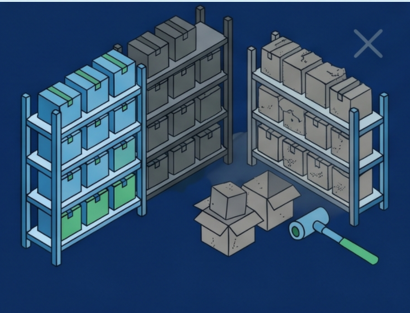
Every manufacturer has a single, universal goal: to match supply with demand as accurately as possible. However, despite all the planning, forecasting, and analysis they put into inventory management, obsolete inventory can still creep into their warehouse.
In this post, we will explore how to identify, manage, and avoid letting obsolete inventory pile up. By gaining a deeper understanding of what drives inventory obsolescence and applying the best strategies to mitigate it, you can protect your bottom line and keep operations lean.
Obsolete inventory is any stock that can no longer be sold or used for its intended purpose, usually because the product is out of date or there’s no longer market demand for it. It could also be due to other factors, such as the introduction of new models or versions or changes in consumer preferences. This unrequired inventory (or dead stock) typically sits in a warehouse, collecting dust, taking up space, and tying up capital that could be invested elsewhere.
There are different types of inventory in manufacturing that can be categorized depending on how quickly it moves or its status in the production process. Knowing these types can help you tell the difference between truly obsolete items and ones that still have potential value.
Active inventory refers to items that move quickly through the supply chain. They are regularly produced, sold, or used in the manufacturing process, so they have short shelf lives. Because they’re constantly in demand, active inventory typically poses the lowest risk of becoming obsolete. The key challenge here is maintaining a steady, adequate supply without overstocking.
On the other hand, slow-moving inventory sells or is used at a slower pace. This category is risky, so it's important to monitor it and manage it carefully. For example, if market trends shift or new product lines are introduced, slow-moving inventory can become obsolete.
Some industries, like niche products or specialized manufacturing, may benefit from having a reasonable quantity of slow-moving goods in stock. This is because, even if sales are slow, the demand for these products is usually consistent.
This is inventory that exceeds current and projected demand levels. Unlike obsolete inventory, excess stock still holds potential value, but it can become obsolete if demand suddenly drops or a new product replaces the old one.
Excess stock is often a result of overproduction, bulk buying to secure supplier discounts, or inaccurate forecasting. The biggest challenge is balancing the benefits of bulk pricing or safety stock against the financial and space costs of holding too much inventory.
Obsolete inventory can result from several factors in your supply chain or external market dynamics. Knowing which factors are most at play in your supply chain is crucial for taking proper preventive measures.
Forecasting sets the stage for how much inventory a company decides to produce or purchase. When demand predictions are off due to flawed data, sudden market changes, or poor analytical methods, businesses often end up with too much stock that can’t be sold.
Overestimating demand can quickly transform once-valuable stock into obsolete inventory if customer preferences shift or technology evolves.
Manufacturers sometimes produce more than market demand just to keep production lines running efficiently or to take advantage of economies of scale. Although this strategy can lower the per-unit cost, the risk is that a large portion of these goods may never find a buyer.
Excess stock can remain on shelves for an extended period, gradually morphing into dead stock if it can’t be sold.
All products have lifecycles — some longer, some shorter — after which they lose relevance or utility. For example, electronics and tech products have a particularly short lifespan before the next models come out.
In industries with quick innovation cycles, keeping tight control of your product lifecycle is crucial to avoid being stuck with inventory that consumers no longer want.
Outdated or manual inventory tracking systems can cause errors in counting, reordering, and identifying slow-moving items. Without real-time visibility, it’s difficult to spot trends or changes in demand, increasing the likelihood that excess stock will accumulate and become obsolete.
Even products with accurate forecasts can become obsolete if sales suddenly drop. An unexpected change in consumer behavior, an economic recession, or new competitors entering the market can significantly reduce demand. Staying tuned to these shifts and quickly adjusting inventory levels is key to minimizing losses.
Identifying obsolete inventory early in its lifecycle can save your business time, money, and warehouse space. Here are some targeted strategies to spot and reduce obsolete inventory:
Inventory audits can expose issues you might not know exist. During audits, you can identify items that have been sitting for extended periods or are nearing the end of their useful life.
Any discrepancies between what’s in your system and what’s physically on the shelves can also reveal hidden issues like overstocking, miscounting, or slow-moving items that might be on the path to obsolescence.
If you use inventory management software that features real-time reporting, you can easily track the age of each item in stock. As soon as a product passes a set threshold, such as 90 days without a turnover, it can be flagged for review.
Quick identification of aging inventory helps you devise timely strategies like targeted marketing or discounted pricing so you can sell it before it becomes "dead stock."
Keeping a close eye on current and historical sales data and marketplace trends can help you steer clear of obsolescence. Notice a decline in orders? Perhaps consumer preferences are shifting, or a competitor has introduced a new product.
Whenever you see a downward trend in demand, review your inventory levels to ensure you’re not overshooting production or purchasing targets.
Excess stock often sits in warehouses due to overproduction or overestimation of demand. If you have excessive stock in your warehouse, try to move it before it ages into obsolescence. Use key performance indicators (KPIs) like turnover ratios, carrying costs, and demand variance to help you track inventory levels and spot excess stock early.
For industries dealing with perishable items or products with a “best before” date, automated expiry alerts are critical and must be implemented.
These alerts notify your team when items are nearing their expiration date, prompting you to decide whether to sell them at a discount, donate them, or rework them in another production run. This proactive approach stops time-sensitive products from silently becoming unsellable.
ABC Analysis segments inventory into categories based on value and turnover rates. “A” items are high-value, high-turnover products; “B” items are moderate in both value and turnover; and “C” items are lower-value, slower-moving goods.
By focusing primarily on “A” items (where most of your revenue comes from), you ensure those are continually optimized while also preventing “C” items from building up unnoticed and turning into obsolete stock.
It is important to monitor shifts in your supplier network or production lines. If a key supplier discontinues a component or changes its specs, your current stock of related items might suddenly become obsolete.
Similarly, if your production line is upgraded or redesigned to accommodate new technologies, leftover parts from the old system may no longer be usable.
Advanced inventory management solutions use AI and predictive analytics to process large volumes of data in real-time.
By spotting patterns in historical sales, product lifecycles, and seasonal demand, these systems can issue early warnings about potential obsolescence. This data-driven approach eliminates guesswork and empowers you to respond proactively.
After spotting early signs of obsolescence, the next step is to manage it effectively while putting in place safeguards to avoid a similar situation in the future. These practices can help prevent obsolete inventory:
Adopting a robust inventory management platform allows you to track quantities, expiration dates, and turnover rates in real-time. You can set up custom alerts, run automated reports, and ensure there’s complete visibility across your supply chain.
By having a unified, accurate view of your inventory, you reduce the likelihood of both stockouts and excess inventory.
Accurate forecasting is a cornerstone of successful inventory management. Make use of historical data, market research, and predictive tools that factor in both internal data (sales history, production schedules) and external data (market trends, economic indicators).
The more precise your forecasting models are, the less likely you’ll end up with surplus stock that can transform into obsolete inventory.
JIT is an approach designed to keep inventory levels as low as possible without compromising operations.
By synchronizing production schedules and supplier deliveries closely with actual demand, you minimize the amount of time products spend sitting on warehouse shelves. This strategy significantly reduces the risk of inventory items becoming outdated or expiring while in storage.
Classification systems, such as ABC analysis, can help you categorize inventory based on its value and turnover speed. Periodic reviews (monthly, quarterly, or biannually, depending on your industry) help identify any items that might require reclassification.
A once-popular “A” item might have shifted to “B” or “C” status if demand has declined. Proactive reclassification ensures that your inventory strategy is always aligned with current market realities.
First In, First Out, or FIFO, uses the oldest products or inventory first. This method is popular for businesses whose products might spoil or where age is a factor, such as fashion or technology. First Expired, First Out, or FEFO, is useful for perishable items, as it prioritizes the soonest expiring inventory.
Staying in touch with your suppliers is an important part of staying on top of things so that you do not end up with obsolete inventory.
Make sure to communicate with suppliers regularly and maintain an ongoing dialogue so that you stay updated on any potential changes to the materials that you order from them. This will help you avoid being caught off guard by any price or availability changes or anything else that might affect your operation.
No matter how proactive you are, there may come a time when you’ll end up with surplus or slow-moving items. Rather than wait for these to become obsolete, consider options like discount sales, product bundling, or liquidation.
In certain cases, creative repurposing or reusing components in other product lines can rescue value from items that would otherwise end up as dead stock.
Manual reordering processes are prone to human errors and delays. Automating procurement workflows ensures that orders go out only when stock levels fall below specific thresholds or when certain conditions are triggered by predictive analytics (e.g., seasonal spikes). Automation dramatically reduces the risk of overordering and helps you keep inventory lean.
Ensure that your staff, from procurement officers to warehouse managers, is well-versed in modern inventory practices and the technology that supports them.
Training empowers teams to notice early signs of obsolescence and take corrective action, including reading and interpreting real-time dashboards, setting up alerts, and knowing when to escalate potential issues to upper management.
Streamlining inventory management can lead to a more profitable operation. With the right tools, it can be done easily. Rather than being a major drain on your resources, it can boost the bottom line.
KIMCO offers a modern inventory management platform equipped with robust features for inventory management, planning and scheduling, and streamlined reporting to help you:
Ready to see how KIMCO can fit into your manufacturing processes?
Book a demo to explore the platform and learn how it can revolutionize your inventory management.

Start your journey with KIMCO today and explore how our manufacturing management software can simplify your operations, step up productivity, and help you meet all your business goals.
