
Explore the key ERP benefits for businesses in the coming years, focusing on how they can drive growth and efficiency across diverse industries.
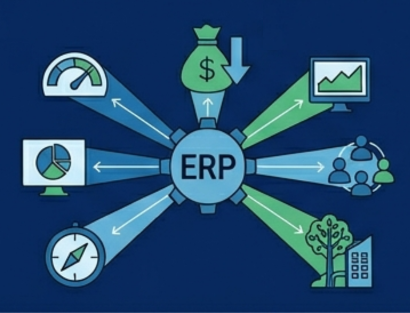
In a time defined by rapid technological advancements and evolving market dynamics, businesses are constantly seeking strategies to enhance operational efficiency and maintain a competitive edge. Enterprise Resource Planning (ERP) systems have emerged as essential tools in this pursuit, and their role is set to become even more critical in 2025 and beyond.
In this article, we will explore the key ERP benefits for businesses in the coming years, focusing on how they can drive growth and efficiency across diverse industries.
ERP systems have undergone a significant transformation since their inception. This transformation is marked by the emergence of advanced technologies that improve their functionality and adaptability. Let's briefly examine how these systems have evolved.
At their inception, ERP systems were primarily on-premise solutions that required substantial hardware investments and lengthy implementations. As technology has advanced, businesses have leaned toward cloud ERP platforms, which offer greater flexibility and scalability.
The shift from on-premise systems to cloud-based ERP platforms reflects the changing needs of businesses. Organizations require agility and the ability to access data from anywhere, which the cloud ERP delivers.
The integration of artificial intelligence (AI) and machine learning (ML) into ERP systems has dramatically enhanced automation and forecasting capabilities. AI-powered ERP systems can now automate routine tasks, analyze vast datasets, and provide accurate forecasts, enabling businesses to make data-driven decisions.
AI and machine learning empower organizations to forecast trends and customer demands more accurately, which helps them strategize and plan better.
With the emergence of AI, machine learning, and such advanced technologies, real-time analytics and Internet of Things (IoT) integrations became critical components of modern ERP systems.
IoT data can be integrated with business systems to give a complete picture of operations. Real-time data is available to businesses, allowing them to address problems quickly. Access to this information empowers companies to make educated decisions and increase productivity.
As businesses adopt cloud technologies and rely on digital data, maintaining data security has become a top priority.
ERP solutions, designed with data security in mind, incorporate cutting-edge encryption and access control technologies. These security features protect unauthorized access and cyber threats, enabling companies to maintain compliance with data privacy regulations.
ERP systems are an essential part of business operations and continue to provide the following benefits that drive growth and efficiency.
ERP systems streamline business processes by facilitating information flow across departments. This integration minimizes silos and ensures that teams work cohesively towards shared objectives. Efficient workflows reduce redundant tasks, optimize resource use, and enhance overall productivity, enabling businesses to focus on their core competencies.
With increased visibility into various departmental functions, organizations can allocate resources more effectively. ERP systems help identify excess inventory, unnecessary operational costs, and underutilized resources.
Today's ERP software offers a robust suite of features, most notably the ability to generate real-time analytics, allowing businesses to make faster and more informed decisions. Having access to current data helps companies with strategic planning.
The forecasting capabilities powered by AI and machine learning allow businesses to anticipate market trends and customer behavior effectively, setting them apart from competitors who rely on historical data.
Planting the seeds for growth requires a robust foundation. Cloud ERP systems offer unparalleled scalability and flexibility, enabling businesses to adapt to changing needs.
Businesses can easily scale their resources up or down, depending on demand, without incurring significant infrastructure costs. Cloud ERP also provides remote access, enabling employees to work from anywhere, anytime.
As regulatory demands increase, businesses must prioritize compliance with various standards. ERP systems that emphasize data security must incorporate robust security measures to help organizations protect sensitive information and ensure compliance with industry regulations and data privacy laws.
By fortifying their cybersecurity measures, businesses can build customer trust, avoid regulations-related penalties, and mitigate risks associated with data breaches.
A major benefit that comes with using an ERP system is improved customer service through access to information that involves customer interactions.
With quick access to customer data, sales representatives and support teams can provide tailored service. Responsive, informed interactions foster customer satisfaction, promote loyalty, and drive repeat business, all while reducing response times.
The shift from traditional on-premise ERP systems to cloud-based platforms is driven by the many advantages offered by cloud ERP. These include:
One of the most compelling reasons businesses opt for cloud ERP is the reduced capital expenditure.
Traditional systems often require substantial hardware investments, while cloud ERP typically operates on a subscription model. Businesses pay subscription fees, which are typically more manageable than the capital expenditures associated with on-premise systems.
Cloud ERP deployments are quicker because they're built to scale and can be accessed from anywhere. In contrast, traditional ERP implementations often take months or years to roll out fully. Since cloud solutions can get your organization up and running much faster, they allow your business to realize the benefits of ERP much faster.
One of the biggest advantages of switching to cloud-based ERP systems is that cloud ERP providers take care of updates, ensuring your organization always has the latest version of the software without you having to worry about any downtime or manual updates. Traditional ERP systems require manual updates, which can create disruptions and require dedicated IT resources.
In the past, businesses had to dedicate internal teams to maintain their ERP systems. This not only costs money but also uses up valuable resources and time that could be spent on more important tasks.
Thanks to cloud ERP platforms, organizations can outsource the burden of maintenance to the service provider. This gives internal teams back the time and resources they were spending on maintenance, allowing them to refocus on core business functions.
Cloud-based ERP solutions excel at scalability, which allows organizations to easily adjust to business growth, changing needs, and additional users. In contrast, traditional systems often require complex modifications to accommodate growth, which significantly delays progress.
In the wake of the COVID-19 pandemic, remote work capabilities have become essential. Cloud ERP systems offer remote access to vital business information, empowering teams to work from anywhere and seamlessly adapt to shifting workplace dynamics.
This flexibility makes it easier for businesses to operate smoothly and adapt to any challenges in their industry.
While there are numerous advantages to adopting an ERP system, businesses must also navigate potential challenges associated with the transition.
Although cloud-based solutions often present lower upfront expenses compared to traditional systems, the switch can still incur significant financial investment. These costs may encompass software licensing fees, hardware acquisitions, consulting fees for system configuration, and the possible need to upgrade existing technology infrastructure.
For smaller organizations, these expenses can pose substantial challenges, potentially diverting funds from other critical operational areas.
ERP systems are inherently complex due to their extensive functionality and features that cater to various business operations. For teams unaccustomed to such systems, the introduction of ERP can lead to confusion and frustration. Employees will need to learn how to navigate these comprehensive platforms, which can involve substantial training efforts.
The system's complexity can also lead to errors during the initial stages as users adapt, which can disrupt workflows and impact overall productivity.
The implementation of an ERP system is a time-intensive process. Companies must carefully plan and execute the transition to ensure minimal disruption to ongoing operations. Depending on the organization’s size, the migration could take months or even years. During this period, teams may experience interruptions and delays in productivity as they adapt to the new system.
Long implementation timelines can lead to decreased employee morale and uncertainty, particularly if teams do not fully grasp the benefits of the new system.
While ERP systems offer flexibility, customization can be a double-edged sword. Organizations often require unique features or processes specific to their business model, leading to the necessity of system customizations.
However, tailoring an ERP system to meet these specific needs can be complex and costly. Excessive customization can also hinder future upgrades, limiting the scalability that many organizations seek. If the system is not built to accommodate potential growth, businesses may find themselves juggling numerous configuration changes that ultimately stall progress instead of supporting it.
The benefits of a robust ERP system are undeniable in today's business environment. To truly capitalize on the advantages of enhanced efficiency, real-time data, and robust security, choosing the right ERP solution is paramount.
KIMCO ERP software is empowering businesses with a comprehensive suite of features tailored to modern operational demands, streamlining operations, boosting efficiency, and enhancing decision-making processes.
Here are a few reasons why businesses are choosing KIMCO:
Are you ready to be part of the KIMCO community and take your business success to new heights? Book a Demo with us and learn how!

Start your journey with KIMCO today and explore how our manufacturing management software can simplify your operations, step up productivity, and help you meet all your business goals.
