
Dive into the essentials of warehouse automation. Explore how automated systems and advanced technologies can transform your daily operations.
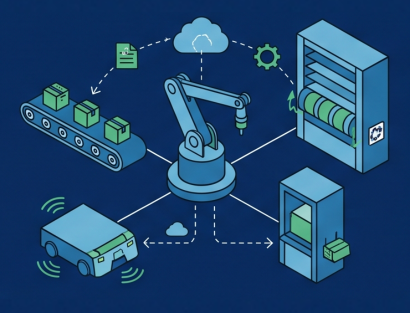
Warehousing is a key element in supply chain management, and with the rise of the global economy, the need for better logistics and supply chain management is more crucial than ever. Innovative approaches to warehouse management result in a smooth and swift movement of goods throughout the supply chain. The most popular approach is warehouse automation, in which AI, robotics, and advanced management are deployed to improve the efficiency and speed of the process.
In this article, we'll dive into the essentials of warehouse automation. We will explore the vast potential of automated warehouse systems for transforming various warehouse operations and the different technologies that make it possible.
To ensure that your warehouse operates with maximum efficiency, we'll also share some best practices and discuss the upcoming trends in automation.
Warehouse automation refers to the use of technology to streamline and enhance warehouse operations. It involves using various machines, systems, and software to automate processes like inventory management, order picking, and packing, performing tasks with minimal human intervention, which increases process efficiency and accuracy.
The rising popularity of ecommerce has essentially transformed warehouse operations. Here's how warehouse automation helps businesses provide better service quality and meet the demands of the modern marketplace:
The warehouse automation landscape is evolving every day. Here are some of the most exciting trends shaping its future:
Robots are becoming increasingly sophisticated, handling a wider range of tasks from picking and packing to palletizing and loading. Autonomous guided vehicles (AGVs) and autonomous mobile robots (AMRs) are revolutionizing warehouse transportation and navigating warehouses efficiently and safely.
AI is transforming warehouse management by optimizing picking routes, predicting demand fluctuations, and even automating decision-making processes. Machine learning algorithms can analyze vast amounts of data to identify inefficiencies and recommend improvements.
The Internet of Things (IoT) is connecting warehouse equipment and inventory, enabling real-time tracking and monitoring. Sensor data can be used to optimize workflows, predict equipment failures, and ensure optimal storage conditions.
These warehouse management systems (WMS) are a rapidly emerging trend. Compared to on-premise systems, cloud-based WMS solutions offer enhanced flexibility, scalability, and accessibility. They provide real-time insights into inventory levels, the status of order fulfillment, and warehouse operations, which makes them attractive to many business owners.
AS/RS, or automated storage and retrieval systems, are remarkable advancements in warehouse technology. These systems leverage automated cranes, shuttles, or mini-loaders to transport goods between storage areas and pick zones.
By using vertical space more efficiently, these systems increase storage capacity without expanding your warehouse footprint. This cuts down on physical labor and also speeds up the retrieval processes.
Predictive maintenance is a forward-thinking approach that leverages data and analytics to anticipate equipment failures before they happen. By utilizing IoT sensors and real-time data streams, predictive maintenance identifies patterns and anomalies that signal impending malfunctions.
This trend is transforming warehouse operations by minimizing unexpected downtime, reducing maintenance costs, and improving the overall reliability of automated systems.
Wearable technologies, such as smart glasses and voice-activated picking systems, help warehouse workers stay productive.
Both wearables help keep warehouse workers on track throughout the day because they enable hands-free access to information and instructions. For example, the worker can listen to an audio file outlining the task at hand, and if they can't remember a step, they can just ask a smart assistant for guidance.
There's a wide variety of warehouse automation systems available, each catering to specific needs and processes. Here's an overview of some popular solutions:
In a GTP system, inventory comes to the worker instead of the worker going to the inventory. This reduces travel time and improves picking efficiency. There are various GTP systems, including carousels, vertical lift modules (VLMs), and put-to-light systems.
These are driverless vehicles that follow pre-defined paths, often guided by wires or magnetic strips embedded in the floor. AGVs are used to transport materials between different points within a warehouse, such as from receiving docks to storage locations or from storage to shipping areas.
Unlike AGVs, AMRs are more flexible and can navigate independently without relying on fixed paths. They use sensors and advanced software to map their environment and make real-time decisions, allowing them to adapt to changing conditions and avoid obstacles.
AMRs are often used for tasks like goods-to-person picking, transporting materials to workstations, and inventory management.
These systems use a combination of conveyors, sorters, and scanners to quickly and accurately sort packages or items based on their destination. They can handle a high volume of packages and improve order fulfillment speed and accuracy. Common types of sortation systems include tilt tray sorters, cross-belt sorters, and shoe sorters.
These systems guide workers through the picking process using visual or auditory cues. In a pick-to-light system, lights illuminate the specific bins or locations where items need to be picked.
In a voice picking system, workers receive instructions and confirmations through a headset. These systems improve picking accuracy and efficiency by minimizing errors and reducing the need for manual data entry.
Automated inventory management and tracking systems use technology like RFID, barcode scanners, and sensors to track the movement and location of inventory throughout the warehouse. They provide real-time visibility into inventory levels, helping to optimize stock management, prevent stockouts, and improve order fulfillment.
Successful warehouse automation requires careful planning and execution. Here are some key best practices to consider:
Consider your business goals and conduct a thorough needs assessment. Analyze your current warehouse operations, identify bottlenecks and inefficiencies, and determine which areas would benefit most from automation.
Assess your available budget and the resources you have available for implementation, including personnel, IT infrastructure, and space.
Define what you hope to achieve with automation and set specific, measurable, achievable, relevant, and time-bound (SMART) goals. Do you need increased throughput, improved accuracy, reduced labor costs, or better space utilization?
Next, establish key performance indicators, such as order fulfillment time, picking accuracy, labor productivity, and inventory turnover, to measure the success of your automation initiatives.
Select automation technologies that align with your specific needs and budget. Consider factors such as the type of work to be automated, the scalability of the solution, and the level of integration required with your existing systems.
Research and compare different technologies, such as AGVs, AMRs, AS/RS, and WMS software, and evaluate their pros and cons. Partner with reputable and experienced providers who can offer reliable equipment, expert support, and ongoing maintenance.
Provide comprehensive training to all employees involved in the automation process. This includes training on new equipment, software, and safety procedures. Openly communicate the benefits of automation and address any concerns employees may have about job security or changes to their roles.
More importantly, consider a phased approach to roll out new technologies. Start with a pilot project to test and refine your automation strategy before implementing it across the entire warehouse.
Continuously monitor the performance of your automation systems. Track key metrics and analyze data to identify areas for improvement. Review and adjust your automation strategy regularly to adapt to changing business needs and technological advancements.
Conduct ongoing maintenance and repairs. Ensure that all automation equipment is properly maintained to prevent downtime and ensure optimal performance.
Although warehouse automation has many benefits to offer, it’s not without its challenges. These include:
One of the biggest barriers to warehouse automation is the substantial upfront investment needed for equipment, software, and infrastructure. This can be a huge hurdle for smaller businesses with limited budgets.
To mitigate this issue, careful cost-benefit analyses and financing options are essential to finding a viable approach to securing the funding needed for implementing automation solutions.
Many employees don't appreciate changes and may resist tweaks made to their work routines. They may even fear that automation will replace their jobs.
To prevent them from having negative reactions like low morale, poor productivity, and even destroying automation equipment and ensure a smooth transition, provide training, listen to their concerns, and maintain open communication.
A modern warehouse automation system can have many components, each with its own requirements, specifications, and limitations. Integrating various automation components (e.g., robots, conveyors, WMS) and software can be complex and time-consuming.
Ensuring smooth data flow and communication between different systems while integrating those components and subsystems requires proper planning, time, and resources.
Malfunctions and glitches in warehouse automation software and systems are some of the worst potential problems for automated warehouses. They can cause costly downtime and unimaginably slow down the process of fulfilling orders.
To minimize downtime and keep the system working reliably, you must maintain equipment regularly, have a preventive maintenance plan, and have robust support from suppliers.
Even though warehouse automation offers several advantages, as we explored above, navigating the process and ensuring smooth operation requires a solid solution. Kimco ERP is a powerful enterprise resource planning system that integrates smoothly with your warehouse automation technologies.
Here's how our software can empower your warehouse automation:
By implementing a robust ERP system like KIMCO ERP alongside your warehouse automation initiatives, you can unlock a new level of efficiency and accuracy in your warehouse.
Book a demo and learn more about how KIMCO ERP can transform your warehouse operations.

Start your journey with KIMCO today and explore how our manufacturing management software can simplify your operations, step up productivity, and help you meet all your business goals.
