
Prevent bottlenecks and boost margins by managing your Work in Process (WIP) inventory. Explore key calculation methods and best practices for manufacturers.
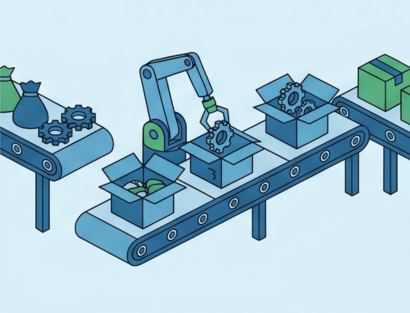
When it comes to operational efficiency, cost reduction, and supply chain management, many manufacturers often overlook the crucial role that work in process (WIP) inventory plays. WIP inventory serves as the bridge between raw materials and finished goods. If it isn’t properly managed, manufacturers can face production bottlenecks, delayed orders, and eroding profit margins.
Whether you’re new to manufacturing or looking to refine your processes, a solid understanding of WIP inventory is essential for maintaining a healthy balance between supply, production capacity, and demand. In this article, we’ll explore everything you need to know about Work in Process inventory: its definition, importance, calculation methods, and best management practices.
Work in Process (WIP) inventory refers to partially finished goods still in the production phase. These are items that have begun their journey through the manufacturing process but are not yet complete. For instance, when raw materials enter the production floor and undergo any form of transformation, they no longer qualify as raw materials but become part of WIP inventory until they are fully assembled, packaged, and ready for sale.
For many businesses, WIP inventory represents a significant asset on the company's balance sheet. It’s critical to keep track of it because it ties up both capital and resources. Understanding the value of your WIP inventory allows you to:
In short, Work in Process inventory helps you see where money, materials, and labor stand in the production cycle. With effective monitoring, you can minimize the time materials spend in limbo, which ultimately speeds up your entire supply chain and frees up working capital.
WIP inventory is made up of several integral parts. Understanding these components is critical to effectively manage and analyze your WIP. Let’s break them down:
This is the dollar value of goods that were already in production at the start of a given period. This figure might be carried over from your previous accounting period. It acts as your baseline for new production activities in the current period.
If the beginning WIP inventory is large, it might indicate that production was slower than expected in the previous period or that demand is higher than your current production capacity. Having a clear view of what you’re starting with helps you set realistic production goals and budgets for the new period.
These are the raw inputs that directly go into your final product. For instance, if you manufacture wooden furniture, the wood itself is a direct material. In electronics, this could be circuit boards and microchips. These materials represent a crucial piece of overall production costs.
Tracking the cost of direct materials provides insight into where your money is going. If your direct material costs spike, you might need to reevaluate supplier contracts or negotiate better deals. If these costs stay low, you can potentially reallocate that budget elsewhere in production.
Direct labor costs are the wages you pay to the workers directly involved in transforming raw materials into finished products. This includes assembly line workers, machine operators, and staff who handle or process the materials.
If direct labor costs are high, it may suggest inefficiencies or training gaps. By evaluating these costs, you can identify skill shortages, invest in workforce training, or introduce automation where feasible. Doing so can significantly reduce production times and improve overall efficiency.
This includes all the indirect costs that support production but aren’t tied to specific products. This covers expenses like utilities (electricity, water, heating), equipment depreciation, indirect materials (like lubricants for machinery), and indirect labor (such as the salaries of supervisors and quality assurance staff).
Overhead costs add up fast and often fly under the radar compared to direct costs. Having a detailed breakdown of your overhead helps to understand the true cost of running a production line. If overhead is excessively high, you might need to revisit facility management, equipment maintenance schedules, and energy consumption strategies.
The ending WIP inventory is the value of any partially finished goods still in production at the end of the accounting period. This number establishes the baseline for the next period and gives you a sense of how many goods are left unfinished at the end of your cycle.
If the number is consistently high, it may indicate bottlenecks in certain stages of your production or forecast issues. A very low ending WIP might suggest a streamlined process—or, in some cases, underproduction if demand remains strong.
To accurately track WIP inventory, familiarize yourself with the following formula:
Beginning WIP Inventory + Manufacturing Costs – Cost of Goods Manufactured (COGM) = Ending WIP Inventory
This simple formula helps capture the flow of goods through the manufacturing process and provides clear insight into what remains unfinished by the end of the period.
Calculating WIP inventory accurately is crucial for financial reporting, production planning, and maintaining an efficient supply chain. Here's a guide to help you calculate the figure accurately:
Start by determining the value of your WIP inventory at the end of the last accounting period. This becomes your Beginning WIP Inventory for the new period. You can find this figure on your previous period’s balance sheet or in your accounting software.
Suppose your Ending WIP Inventory for the last period was $50,000. That becomes your new Beginning WIP for this period.
Next, sum up all the costs incurred in the current production process. This includes the cost of raw materials used in production, wages for employees directly involved in manufacturing, and indirect costs such as utilities, facility upkeep, and indirect labor.
Make sure you only include costs directly associated with your production during the current period. If you run multiple product lines, be sure to allocate costs accordingly.
For example, direct materials cost $20,000, direct labor costs $15,000, and overhead comes to $10,000. Your total manufacturing costs for the period would be $45,000.
Once you know your total production costs for the period, subtract the cost of goods that were fully manufactured during that time (aka Cost of Goods Manufactured (COGM). This represents the total value of completed items moved from WIP to Finished Goods Inventory.
For example, if you fully manufacture goods totaling $30,000 in costs, you would subtract $30,000 from the sum of your Beginning WIP and current manufacturing costs.
Now, let's put it all together using our example numbers.
Ending WIP = $50,000 + $45,000 − $30,000 = $65,000
This $65,000 is your Ending Work in Process Inventory for the period, which will become the next period’s Beginning WIP.
Now that you know what WIP inventory is and how to calculate it, the next step is learning how to manage it effectively. Below are some strategies to keep your WIP inventory under control and production lines running smoothly.
One of the best ways to gain visibility into your WIP is by implementing an Enterprise Resource Planning (ERP) system that offers real-time tracking. When you can see at any moment what stage each product is in, you can more easily identify issues like machine downtime or labor bottlenecks.
ERP solutions help unify data from different areas of your business, such as purchasing, production, sales, and finance to provide a single source of truth that reduces errors and inefficiencies.
Effective production scheduling is vital for ensuring that materials and labor align perfectly with customer demand. By scheduling production runs efficiently:
Use demand forecasting and historical sales data to create a detailed production plan. Make sure you build in some buffer time for unforeseen production hiccups, such as machinery breakdowns or supplier delays.
Lean manufacturing focuses on eliminating waste and maximizing the value delivered to the customer. This approach encourages you to examine every step in your production process and determine whether it adds value or contributes to waste.
Common lean principles include:
By adopting lean principles, you can keep WIP levels low, shorten production lead times, and improve overall product quality.
Underutilized labor or machinery can lead to inefficiencies and a buildup of WIP. Make sure you monitor machine utilization rates to identify bottlenecks at machines that slow down the process and employee productivity to determine if your workforce is skilled enough to handle specialized tasks and troubleshoot minor machine issues or if they need training.
If labor or machinery is idle, your unfinished goods might stay in WIP longer than necessary. Aligning labor schedules with production needs can help ensure a smooth flow from raw materials to finished products.
Setting WIP inventory limits can prevent excessive buildup. Setting these limits requires a thorough understanding of your production capacity, lead times, and customer demand.
Label workstations with maximum WIP levels. This visual cue helps operators and managers alike see when there’s too much product waiting and triggers a need to address the bottleneck.
Smooth production depends heavily on the timely delivery of raw materials. If you face frequent delays or get materials that don’t meet quality standards, you’ll see a spike in your WIP as unfinished products sit in limbo. Collaboration with suppliers allows you to:
Manufacturing isn’t static; demand fluctuates, technologies evolve, and labor conditions change. Conduct regular reviews of your WIP inventory levels to see if they align with your current production capacity and market demands. During these reviews:
Staying proactive and adaptable ensures that your WIP levels remain optimal, saving you money and speeding up your production.
Understanding and effectively managing work-in-process inventory is crucial for any manufacturing operation, but it doesn't have to feel like an uphill climb. Modern ERP software solutions like KIMCO streamline production tracking and inventory management, allowing manufacturers to monitor unfinished goods closely.
The platform provides tools for:
By comprehensively tracking and optimizing your WIP, you can enhance operational efficiency, lower costs, and ultimately boost profitability.
Book a demo and learn how we can help you elevate your production process!

Start your journey with KIMCO today and explore how our manufacturing management software can simplify your operations, step up productivity, and help you meet all your business goals.
